🏠 Home 📚 Units 🧪 Labs
Ask AI Assistant
Subscribe
Welcome to

BacEnglishLab

Your complete English preparation companion for the Moroccan Baccalaureate exam — created by Prof. Omar Hajji, who brings over 20+ years of experience.

🎯
Get the highest marks on the BAC English exam — without expensive private classes, studying at your own pace, anytime, anywhere.

This platform was created by Prof. Omar Hajji, who brings more than 20 years of experience to BAC English preparation. Prof. Omar has guided thousands of 2nd-year Baccalaureate students through the national exam, and BacEnglishLab brings together everything he teaches in class — video lessons, vocabulary, grammar, writing practice, reading comprehension, and full mock exams — into one platform you can use anywhere, anytime. With live sessions, AI-powered writing feedback, and bilingual explanations in English and Arabic, you'll have everything you need to master the BAC English exam.

🎯
احصل على أعلى نقطة في امتحان الباكالوريا للغة الإنجليزية — بدون دروس خصوصية مكلفة، وبإيقاعك الخاص، في أي وقت ومن أي مكان.
تم إنشاء هذه المنصة من طرف الأستاذ عمر حجي، الذي يجمع أكثر من 20 سنة من الخبرة في تحضير الباكالوريا. رافق الأستاذ عمر آلاف تلاميذ السنة الثانية باكالوريا نحو الامتحان الوطني. منصة BacEnglishLab تجمع كل ما يدرّسه في القسم — دروس مصوّرة، مفردات، قواعد، تعبير كتابي، فهم نص، وامتحانات تجريبية — في فضاء واحد بين يديك في أي وقت وأي مكان.
Prof. Omar Hajji
Prof. Omar Hajji
Founder
📹 Watch the Introduction
🎬
Introduction video — coming soon
الفيديو التعريفي — قريباً
Everything you'll find inside

What's in the platform

📚

10 Full BAC Units

Every 2nd-year BAC unit covered with video lessons, vocabulary, grammar, functions, and writing — Gifts of Youth, Education, Sustainable Development, Women & Power, and more.

🎮

Game Lab

6 interactive games — Word Quiz, Word Match, Grammar Challenge, Type It Right, Say It Right, BAC Blitz — with 137+ questions across all units.

✍️

Writing Lab

10 writing types with 3-stage guidance: Learn, Plan, then Write — with bilingual AI feedback that catches off-topic answers and gives you a real BAC-style score.

📖

Reading Lab

20 BAC-style reading texts (2 per unit), each with 6 comprehension exercises and full model answers.

📋

Exam Lab

20 full mock BAC exams — 40 points each, 2-hour timer, real exam format. Comprehension, language, and writing — all scored.

🎯

Practice Lab

13 topics · 215 targeted exercises — word formation, all 8 tenses, phrasal verbs, conditionals, wishes, modals, passive, reported speech and more. Each topic comes with a clear rules reminder.

Live Sessions

Live classes with Prof. Omar inside the platform — Q&A, exam walkthroughs, personalised feedback. Recordings available if you miss a session.

What students say

Students' opinions

★★★★★

"The best teacher ever! 🙌"

S
Salma B.
2nd Bac Sciences
★★★★★

"Mr English 🇬🇧 I got 19.5 in the Baccalaureate thanks to him!"

Y
Youssef A.
2nd Bac Letters
★★★★★

"Prof. Omar makes English so easy to understand. Highly recommend! ❤️"

L
Lina M.
2nd Bac Sciences
★★★★★

"Best English platform in Morocco. Period. 👏"

A
Anas K.
2nd Bac Sciences Maths
★★★★★

"I used to hate English. Now it's my favourite subject 😄"

H
Hiba R.
2nd Bac Letters
★★★★★

"18/20 in the national exam ✨ thank you Mr Hajji!"
M
Mehdi T.
2nd Bac Economics
Get Offer on WhatsApp
📞 +212 640 203 268 · Already a member?
2nd Year Baccalaureate · English

Master English
for the Bac Exam
with Confidence

10
Complete Units
50+
Video Lessons
200+
Quiz Questions

All 10 Units Covered

🔓
01
Gifts of Youth
الشباب والمواهب
🔓
02
Humour
الفكاهة
🔓
03
Education
التعليم
🔓
04
Sustainable Development
التنمية المستدامة
🔓
05
Women and Power
المرأة والسلطة
🔓
06
Cultural Issues and Values
القضايا والقيم الثقافية
🔓
07
Citizenship
المواطنة
🔓
08
Brain Drain
هجرة الأدمغة
🔓
09
Advances in Science and Technology
التقدم العلمي والتكنولوجي
🔓
10
International Organizations
المنظمات الدولية

The 6 Labs

Practice every BAC skill with dedicated interactive tools — games, writing, reading, full exam simulations, targeted grammar drills, and weekly live sessions with Prof. Omar.

🎮 GameLab
🎯
GameLab
6 vocabulary and grammar games — Word Quiz, Word Match, Grammar Challenge, Type It Right, Say It Right, and BAC Blitz. 10 questions per round across all 10 units.
6 games · 10 units · 137+ questions
✍️ Writing Lab
📝
Writing Lab
10 writing types with 3-stage guidance: Learn the structure, Plan your writing, then Write with live feedback. Covers paragraphs, essays, emails, reports, and more.
10 writing types · AI feedback · Model answers
📖 Reading Lab
🔍
Reading Lab
20 BAC-style reading texts — 2 per unit. Each with 6 comprehension exercises: True/False, Answer questions, Complete sentences, Synonyms, References, and Writer's purpose.
20 texts · 6 exercises each · Model answers
📋 Exam Lab
⏱️
Exam Lab
40 full BAC exam simulations — Tests A, B, C and D per unit. Each exam has 3 sections (Comprehension, Language, Writing), 40 points, and a 2-hour countdown timer.
40 exams · 40 pts each · 2h timer
📝 Practice Lab
🎯
Practice Lab
Targeted practice on the BAC's most-tested points — word formation, all 8 tenses, phrasal verbs, linking words, conditionals 2 & 3, wishes, modals, gerund & infinitive, passive voice, reported speech, relative pronouns and functions. Each topic comes with a clear rules reminder and instant feedback.
13 topics · 31 drills · 215 exercises
📡 Live Sessions
🎥
Live Sessions Lab
Weekly live BAC English sessions with Prof. Omar on Zoom — exam strategy, writing workshops, and Q&A. Past sessions stay accessible as YouTube replays.
Weekly Zoom · YouTube replays · Open to all members
📥 Downloads
📄
Downloadable Resources
12 rich printable resources — unit summaries, tenses, vocabulary, collocations, functions, phrasal verbs, grammar charts, irregular verbs, word formation, writing templates with models, linking words, and exam strategy guide.
12 Resources · Print-ready · Full BAC coverage

Place all files in the same folder to activate all links.

← Home / Units / Unit 1
Unit 01 · Gifts of Youth

Gifts of Youth — مواهب الشباب

الوحدة الأولى: الشباب والمواهب
Vocabulary & Collocations Word Formation Gerund / Infinitive Functions Writing
📹 Unit Lesson Video
Unit 1 · Gifts of Youth thumbnail
▶ Unit 1 · Gifts of Youth

Key Vocabulary — المفردات الأساسية

WordMeaningالشرح بالعربية
youthyoung peopleالشباب
gifttalent / abilityنعمة / موهبة
opportunitychanceفرصة
responsibilitydutyمسؤولية
creativityability to createالإبداع
ambitionstrong desire to succeedالطموح
volunteeringhelping without paymentالعمل التطوعي

Important Collocations — التعابير المركّبة

CollocationMeaningالشرح بالعربية
gifts of youthtalents young people haveمواهب وطاقات الشباب
youth empowermentgiving youth power and confidenceتمكين الشباب
active citizenshipparticipation in societyالمواطنة الفعالة
voluntary workunpaid social workالعمل التطوعي
leadership skillsability to leadمهارات القيادة
equal opportunitiessame chances for allتكافؤ الفرص
social engagementinvolvement in societyالانخراط الاجتماعي

Word Formation — اشتقاق الكلمات

BaseNounAdjectiveالشرح
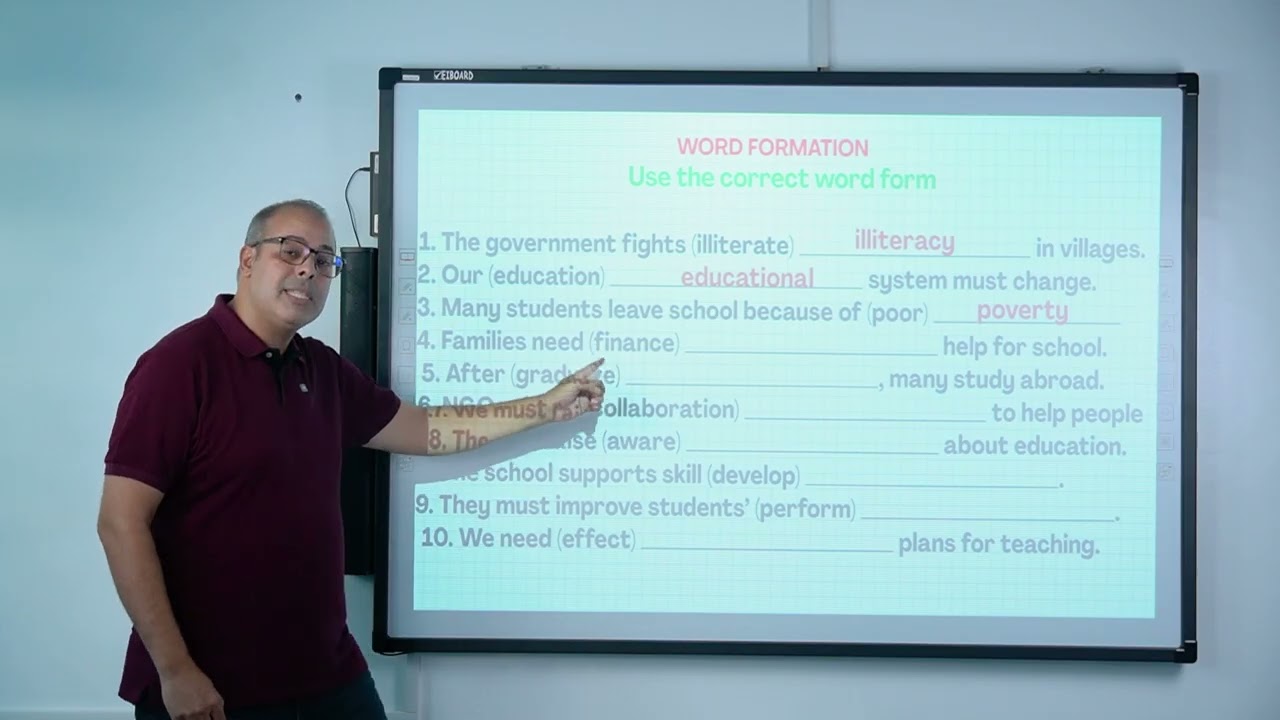
educateeducationeducationalالتعليم
createcreationcreativeالإبداع
participateparticipationparticipativeالمشاركة
contributecontributioncontributiveالمساهمة
leadleadershipleadingالقيادة
developdevelopmentdevelopedالتنمية
motivatemotivationmotivatedالتحفيز
empowerempowermentempoweredالتمكين

Gerund – Infinitive – Bare Infinitive

🔵 I. Gerund (Verb + ING)
بعض الأفعال والتعابير كيجي من بعدها فعل بـ ing
1. After some verbs: enjoy – avoid – finish – suggest – like – hate – keep – practice
Young people enjoy volunteering.
He avoids wasting time.
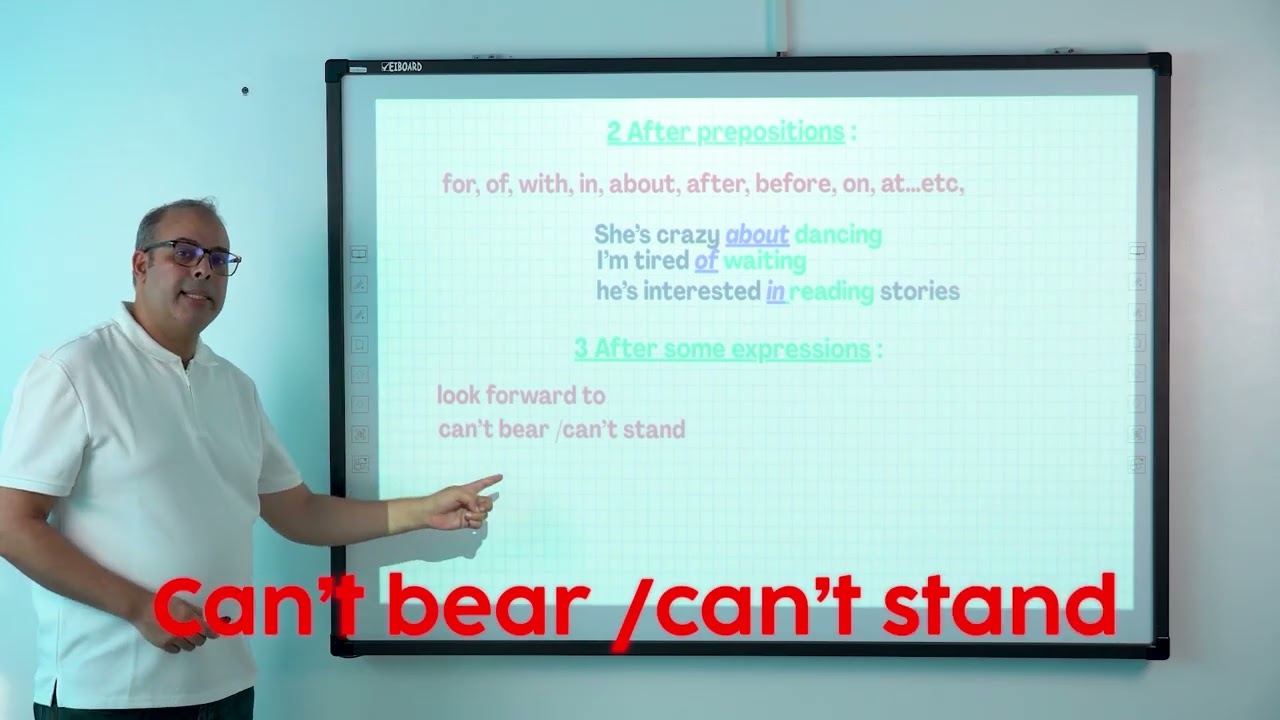
2. After prepositions (in / on / at / by / after / before…)
Youth succeed by working hard.
She is interested in helping others.
3. After fixed expressions: look forward to / it's no use / it's worth / can't stand / would you mind
I look forward to meeting new people.
It's worth supporting youth projects.
He can't stand wasting time.
🟢 II. Infinitive (to + verb)
هاد الأفعال كتدل على الرغبة أو القرار، وكيجي من بعدها to + verb
1. After verbs: want – hope – decide – plan – agree – need – refuse
Youth want to succeed.
He decided to join a youth club.
2. After adjectives: happy – proud – ready – willing – eager – glad
Young people are eager to learn.
She is proud to represent her school.
🟡 III. Bare Infinitive (verb without "to")
من بعد modal verbs وبعد make / let / help كيجي الفعل بلا to
1. After modal verbs: can – must – should – may – might – will
Youth can change society.
Young people must respect the law.
2. After make, let, help
This program makes students work harder.
Parents let their children choose freely.
Volunteering helps youth develop skills.

Functions — Giving Opinion / Agreeing / Disagreeing

💬 Giving Opinion

In my opinion,
في رأيي
I think that…
أعتقد أن
I believe that…
أؤمن بأن
From my point of view,
من وجهة نظري

✅ Agreeing

I agree with you
أتفق معك
That's true
هذا صحيح
Exactly
بالضبط
You're absolutely right
أنت محق تمامًا

❌ Disagreeing

I disagree
لا أتفق
I don't think so
لا أظن ذلك
I'm afraid I don't agree
أخشى أنني لا أتفق
On the contrary,
على النقيض
📝 BAC Tip
فالباك: كيجي اختيار الجواب الصحيح أو respond to situations — تعرف تستعمل هاد التعبيرات صح.

Writing Task — Describing a Person

1
Introduction: Who is the person? (age / relation)
2
Physical appearance: Height, build, hair, face
3
Personality & qualities: Responsible, ambitious, creative…
4
Role / activities: Volunteering, studying, leadership
5
Conclusion: Your opinion or feeling about youth
📝 Model Answer
Young people play an important role in society. I would like to describe my cousin Yassine, who is a very active young man. He is tall and slim, with short black hair. Yassine is responsible, ambitious, and creative. He spends his free time volunteering in his neighbourhood and helping younger students. What I admire most about him is his sense of responsibility and leadership. In my opinion, young people like Yassine are real gifts to society.
💡 Useful Expressions
He is a young person who… He is known for his… What I admire most is… He plays an important role in…

Ready to test yourself? 🎯

Take the Unit 1 interactive quiz — vocabulary, grammar, word formation & more

Unit 1 · Gifts of Youth

Interactive Quiz

Test your knowledge of vocabulary, grammar, and word formation

Exercise 1
Vocabulary — Choose the correct adjective
8 pts
Choose from: responsible – creative – ambitious – motivated – active – independent – talented – confident
Exercise 2
Word Formation — Use the correct form
8 pts
Exercise 3
Grammar — Gerund (after verbs, prepositions & fixed expressions)
15 pts
A. After Some Verbs
B. After Prepositions
C. After Fixed Expressions
Exercise 4
Grammar — Infinitive (after verbs & adjectives)
8 pts
A. After Some Verbs
B. After Adjectives
Exercise 5
Grammar — Bare Infinitive (modal verbs & make/let/help)
6 pts
A. After Modal Verbs
B. After Make, Let, Help
Exercise 6
Functions — Choose the correct expression
6 pts
← Home /Units/ Unit 3
Unit 3 · Education

Education — التعليم

التعليم
📹 Unit Lesson Video
Unit 3 · Education thumbnail
▶ Unit 3 · Education

Overview: Unit 3 covers formal, informal and non-formal education, the past perfect tense, making complaints, and report writing.

تتناول الوحدة أنواع التعليم المختلفة وأهميتها في تنمية الفرد والمجتمع.

Key Vocabulary — المفردات الأساسية

Word / Expressionالمعنى بالعربية
formal educationالتعليم النظامي
informal educationالتعليم غير الرسمي
non-formal educationالتعليم غير النظامي
basic educationالتعليم الأساسي
vocational educationالتعليم المهني
literacy classesدروس محو الأمية
fight illiteracyمحاربة الأمية
adult illiteracyالأمية لدى الكبار
multimedia roomقاعة متعددة الوسائط
drop out of schoolالانقطاع عن الدراسة
gender discriminationالتمييز بين الجنسين
gifted studentsالتلاميذ الموهوبون
university graduateخريج جامعي
boarding schoolمدرسة داخلية
critical thinkingالتفكير النقدي
curriculumالمنهاج
qualificationمؤهل / شهادة
lifelong learningالتعلم مدى الحياة

Collocations — المتلازمات اللفظية

Collocationالترجمة بالعربية
higher educationالتعليم العالي
compulsory educationالتعليم الإلزامي
lifelong learningالتعلم مدى الحياة
school dropoutالانقطاع عن الدراسة
literacy programmeبرنامج محو الأمية
vocational trainingالتكوين المهني
educational systemالنظام التعليمي
academic achievementالتحصيل الدراسي
pass an examينجح في الامتحان
sit for an examيجتاز الامتحان
gain knowledgeيكتسب المعرفة
acquire skillsيكتسب المهارات

Word Formation — اشتقاق الكلمات

BaseVerbNounAdjective
educateeducateeducationeducational
traintraintrainingtrained
qualifyqualifyqualificationqualified
developdevelopdevelopmentdeveloped
improveimproveimprovementimproved
instructinstructinstructioninstructional

The Past Perfect Tense — الماضي التام

Form: had + past participle
She had finished the course.
They had attended the workshop.
Use: Action before another past action
نستعمل الماضي التام للتعبير عن حدث وقع قبل حدث آخر في الماضي
She had completed the training before she applied.
The workshop had started when we arrived.
Key Rule: Older → Past Perfect | Recent → Past Simple
Structure 1: Past Perfect + before/when/by the time + Past Simple
Structure 2: Past Simple + after/as soon as + Past Perfect
By the time we arrived, the lecture had begun.

Making and Responding to Complaints — الشكاوى

😤 Making Complaints

I'm afraid I have a complaint.
أود تقديم شكاية.
I'm not satisfied with the course.
لست راضياً عن الدورة.
There seems to be a problem with...
يبدو أن هناك مشكلاً في...

✅ Responding

I'm sorry to hear that.
أنا آسف لسماع ذلك.
We apologize for the inconvenience.
نعتذر عن الإزعاج.
We will solve it as soon as possible.
سنعالج المشكل في أقرب وقت.

📝 BAC Tip

فالباك: كتجي situation وخاصك تعبر على شكاية أو ترد عليها.

Writing: A Report About an Educational Event

1
Title
2
Introduction: Date, time, place
3
Body: Who attended + activities
4
Reactions: How participants felt
5
Conclusion: Overall evaluation
Report on Career Guidance Workshop

On 15 March 2025, a career guidance workshop was organized in the school conference hall from 9:00 a.m. to 12:00 p.m. The event was attended by 60 second-year Baccalaureate students.

During the workshop, a presentation on career choices was delivered. Then, students participated in group discussions. By the time the workshop ended, students had gained useful information about future career opportunities.

Overall, the participants found the workshop informative and beneficial. It was a successful and well-organized event.

Ready to test yourself? 🎯

Take the Unit 3 interactive quiz

Unit 3 · Education

Interactive Quiz

Exercise 1
Vocabulary — Gap Filling
10 pts
Choose from: literacy classes – fight illiteracy – drop out of school – vocational education – multimedia room – gender discrimination – university graduate – boarding school – critical thinking – basic education
Exercise 2
Word Formation
10 pts
Exercise 3
Grammar — Past Simple or Past Perfect
10 pts
Exercise 4
Functions — Complaints (MCQ)
5 pts
← Home /Units/ Unit 4
Unit 4 · Sustainable Development

Sustainable Development — التنمية المستدامة

التنمية المستدامة
📹 Unit Lesson Video
Unit 4 · Sustainable Development thumbnail
▶ Unit 4 · Sustainable Development

Overview: Unit 4 covers environmental challenges, future tenses (simple and perfect), making requests, and paragraph writing.

تتناول الوحدة التنمية المستدامة وأهمية حماية البيئة للأجيال القادمة.

Key Vocabulary — المفردات الأساسية

Word / Expressionالمعنى بالعربية
sustainable developmentالتنمية المستدامة
renewable energyالطاقة المتجددة
pollutionالتلوث
climate changeالتغير المناخي
natural resourcesالموارد الطبيعية
recyclingإعادة التدوير
carbon emissionsانبعاثات الكربون
biodiversityالتنوع البيولوجي
deforestationإزالة الغابات
global warmingالاحترار العالمي

Collocations — المتلازمات اللفظية

Collocationالترجمة بالعربية
renewable energyالطاقة المتجددة
sustainable developmentالتنمية المستدامة
environmental protectionحماية البيئة
climate changeتغير المناخ
global warmingالاحتباس الحراري
greenhouse gasesالغازات الدفيئة
water shortageندرة المياه
natural resourcesالموارد الطبيعية
reduce pollutionيقلل التلوث
recycle wasteيعيد تدوير النفايات
save energyيوفر الطاقة
protect biodiversityيحمي التنوع البيولوجي

Word Formation — اشتقاق الكلمات

BaseNounAdjective
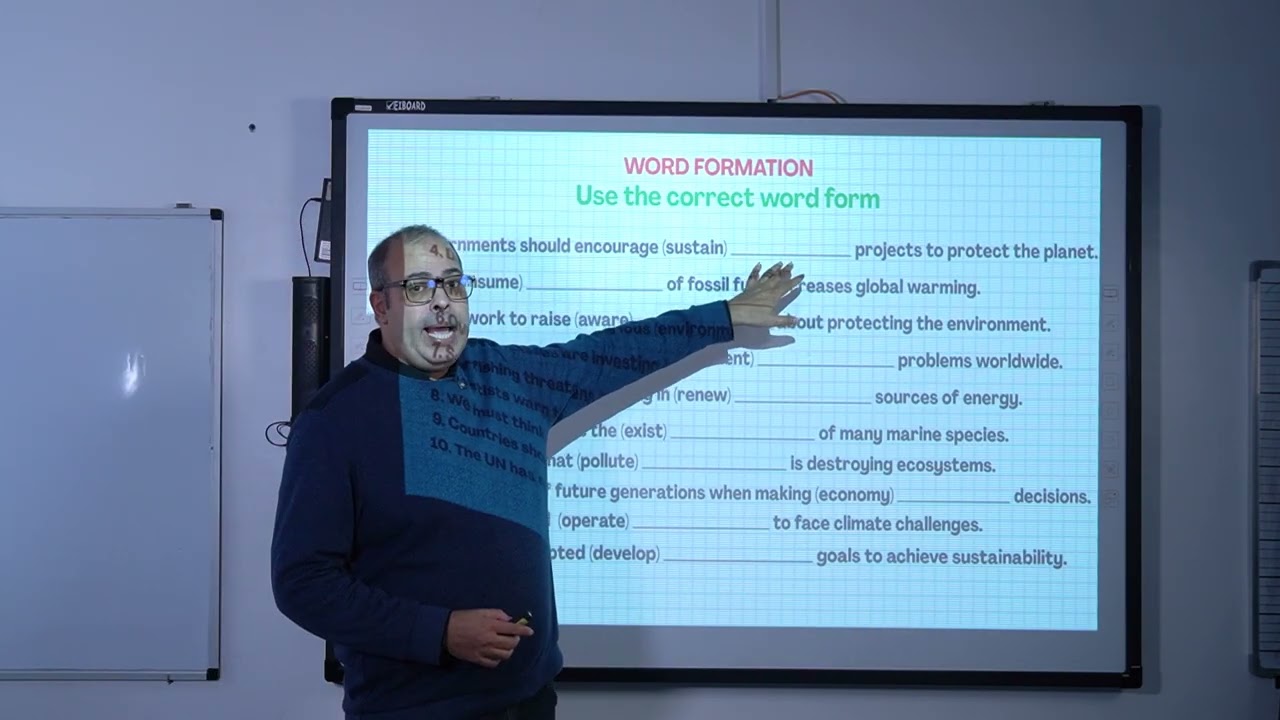
developdevelopmentdeveloped
sustainsustainabilitysustainable
pollutepollutionpolluted
protectprotectionprotective
environmentenvironmentenvironmental
recyclerecyclingrecyclable

Future Simple vs Future Perfect — المستقبل البسيط والتام

Future Simple: will + base verb
للتنبؤ، الوعود، والقرارات المستقبلية
Governments will reduce pollution.
People will use more renewable energy.
Future Perfect: will have + past participle
للتعبير عن حدث سيكتمل قبل وقت محدد في المستقبل — key word: BY
By 2030, countries will have reduced carbon emissions.
By next year, we will have planted 1,000 trees.
Key: by + future time → Future Perfect ✅
by 2030 / by next year / by the end of the month / by the time + clause

Making Requests — الطلبات

🙏 Making Requests

Can you recycle these bottles, please?
هل يمكنك إعادة تدوير هذه الزجاجات؟
Could you turn off the lights?
هل يمكنك إطفاء الأضواء؟
Would you mind saving energy?
هل تمانع في توفير الطاقة؟

✅ Accepting

Of course.
بالطبع.
No problem.
لا مشكلة.
I'd be happy to help.
يسعدني المساعدة.

❌ Refusing

I'm sorry, I can't.
آسف، لا أستطيع.
I'm afraid I'm not able to.
أخشى أنني غير قادر.

Writing: A Paragraph

1
Topic Sentence: Main idea
2
Supporting Ideas: Explanations & examples
3
Concluding Sentence: Final opinion
First In addition Moreover For these reasons
My favourite concern for the planet is renewable energy for the following reasons. First, it is clean and does not harm the environment. In addition, it helps reduce carbon emissions. Moreover, investing in renewable energy creates new job opportunities. For these reasons, I believe renewable energy is the most important solution to climate change.

Ready to test yourself? 🎯

Take the Unit 4 interactive quiz

Unit 4 · Sustainable Development

Interactive Quiz

Exercise 1
Vocabulary — Gap Filling
5 pts
Choose from: renewable energy – pollution – biodiversity – carbon emissions – recycling
Exercise 2
Word Formation
5 pts
Exercise 3
Grammar — Future Simple or Future Perfect
10 pts
Exercise 4
Functions — Requests (MCQ)
3 pts
← Home /Units/ Unit 5
Unit 5 · Women and Power

Women and Power — المرأة والسلطة

المرأة والسلطة
📹 Unit Lesson Video
Unit 5 · Women and Power thumbnail
▶ Unit 5 · Women and Power

Overview: Unit 5 explores women's roles in leadership and society, the passive voice, giving advice, and film review writing.

تتناول الوحدة دور المرأة في المجتمع والقيادة والمساواة بين الجنسين وتمكين المرأة.

Key Vocabulary — المفردات الأساسية

Word / Expressionالمعنى بالعربية
gender equalityالمساواة بين الجنسين
empowermentالتمكين
leadershipالقيادة
discriminationالتمييز
women's rightsحقوق المرأة
role modelقدوة
achievementإنجاز
political participationالمشاركة السياسية
stereotypeصورة نمطية
equal opportunitiesفرص متكافئة

Collocations — المتلازمات اللفظية

Collocationالترجمة بالعربية
gender equalityالمساواة بين الجنسين
equal opportunitiesفرص متساوية
women's rightsحقوق المرأة
decision-making positionsمناصب صنع القرار
break the glass ceilingيكسر السقف الزجاجي
political participationالمشاركة السياسية
female leadershipالقيادة النسائية
women's empowermentتمكين المرأة
fight discriminationيحارب التمييز
access educationالولوج إلى التعليم
achieve successيحقق النجاح
career advancementالتقدم المهني

Word Formation — اشتقاق الكلمات

BaseNounAdjective
equalequalityequal
empowerempowermentempowered
achieveachievementachieved
leadleadershipleading
discriminatediscriminationdiscriminatory
educateeducationeducated

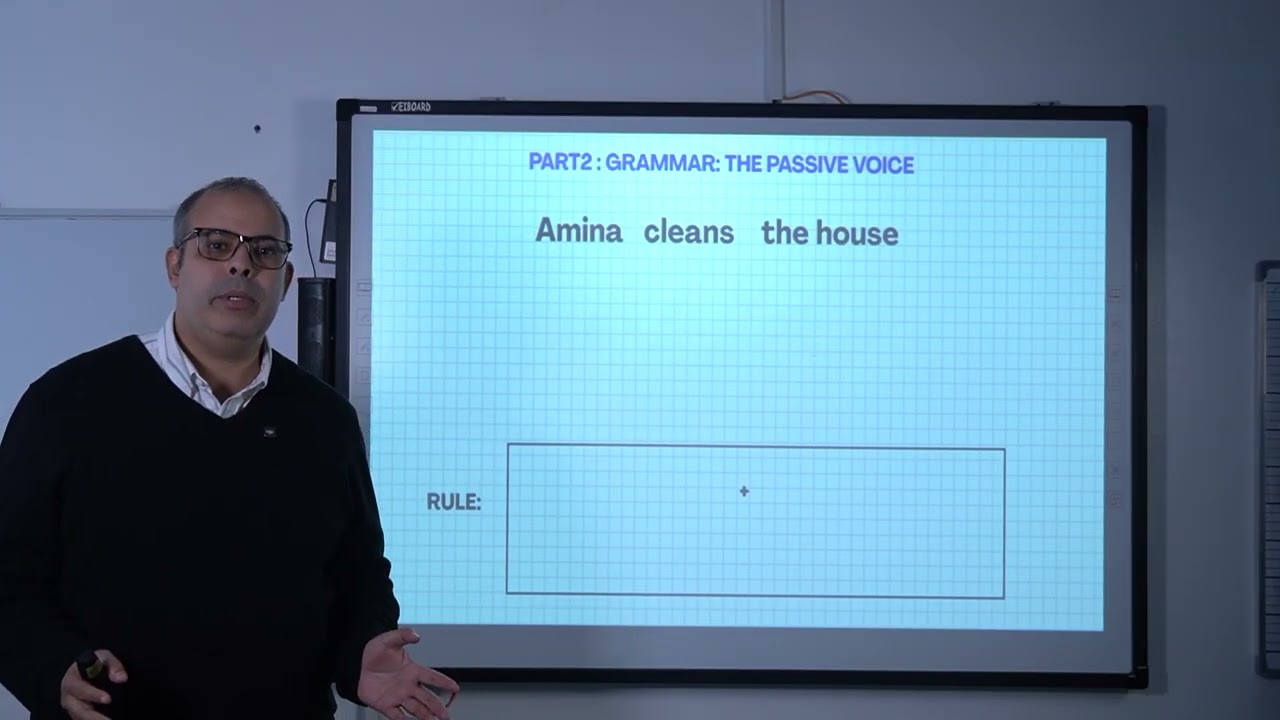
The Passive Voice — المبني للمجهول

Why use the Passive?
نستعمل المبني للمجهول عندما يكون الفاعل غير مهم أو غير معروف
1. The doer is unknown
2. The action is more important than the doer
3. In formal writing
Form: Object + be + past participle (+ by + subject)
Active: People respect women leaders.
Passive: Women leaders are respected (by people).
Passive Forms by Tense
Present Simple: is/are + pp → Women are respected.
Past Simple: was/were + pp → Laws were passed.
Future: will be + pp → Rights will be guaranteed.
Present Perfect: have/has been + pp → Achievements have been recognized.

Asking for and Giving Advice — طلب النصيحة وتقديمها

❓ Asking for Advice

What should I do?
ماذا يجب أن أفعل؟
What do you advise me to do?
ماذا تنصحني أن أفعل؟
Do you think I should...?
هل تعتقد أنني يجب...؟

💡 Giving Advice

You should work hard.
يجب عليك العمل بجد.
You ought to participate more.
ينبغي لك المشاركة أكثر.
If I were you, I would study law.
لو كنت مكانك لدرست القانون.
I advise you to defend women's rights.
أنصحك بالدفاع عن حقوق المرأة.

📝 BAC Tip

فالباك: كتجيك situation — respond by giving advice or asking for it.

Writing: A Film Review

1
Introduction: Title, genre, director
2
Summary: Briefly describe the story
3
Message/Theme: Main idea of the film
4
Personal Opinion: Your view of the film
5
Recommendation: Should others watch it?
Review of Hidden Figures

Hidden Figures is a drama directed by Theodore Melfi. The film tells the story of women who worked in science despite discrimination. The performances were excellent, and the message was inspiring. The film shows that women can achieve great success when given equal opportunities. In my opinion, it is an inspiring and motivating film that everyone should watch.

Ready to test yourself? 🎯

Take the Unit 5 interactive quiz

Unit 5 · Women and Power

Interactive Quiz

Exercise 1
Vocabulary — Gap Filling
5 pts
Choose from: empowerment – discrimination – leadership – equality – stereotypes
Exercise 2
Word Formation
5 pts
Exercise 3
Grammar — Passive Voice (MCQ)
5 pts
Exercise 4
Functions — Advice (MCQ)
5 pts
← Home /Units/ Unit 2
Unit 02 · Humour

Humour — الفكاهة

الوحدة الثانية: الفكاهة ودورها في حياة الإنسان
Vocabulary & Word Formation Modal Verbs Functions Writing
📹 Unit Lesson Video
Unit 2 · Humour thumbnail
▶ Unit 2 · Humour

Key Vocabulary — المفردات الأساسية

Word / ExpressionMeaningالمعنى بالعربية
humourthe quality of being funnyالفكاهة
jokesomething said to cause laughterنكتة
funnycausing laughterمضحك
laughterthe act of laughingالضحك
sense of humourability to appreciate jokesحس الفكاهة
comediana person who performs comedyكوميدي
audiencepeople watching a performanceجمهور
embarrassingcausing embarrassmentمحرج
scarycausing fearمخيف
amusingentertaining, mildly funnyمسلٍ

Collocations — المتلازمات اللفظية

Collocationالترجمة بالعربية
sense of humourحس الفكاهة
tell a jokeيحكي نكتة
crack a jokeيلقي نكتة
burst out laughingينفجر ضحكًا
make fun ofيسخر من
laugh atيضحك على
play a prank onيمزح مع / يخدع على سبيل المزاح
have a good laughيستمتع بالضحك
see the funny sideيرى الجانب المضحك
humorous remarkتعليق فكاهي
comic situationموقف كوميدي
funny storyقصة مضحكة

Word Formation — اشتقاق الكلمات

Base WordVerbNounAdjective
humourhumourhumorous
laughlaughlaughterlaughing
amuseamuseamusementamusing
embarrassembarrassembarrassmentembarrassing
frightfrightenfrightfrightening
entertainentertainentertainmententertaining
comedycomedycomic
jokejokejokejoking

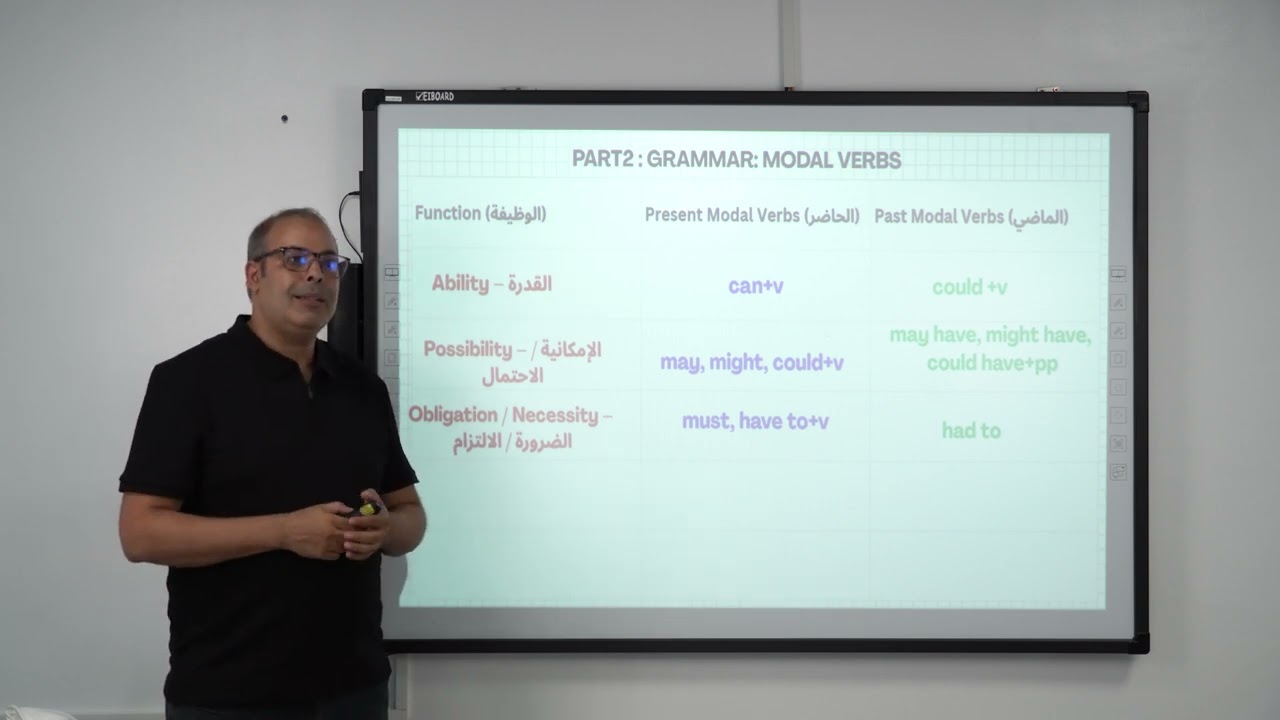
Modal Verbs — الأفعال الشرطية

FunctionPresentPastالترجمة
Abilitycan / could / be able towas/were able to / couldالقدرة على فعل شيء
Possibilitymay / might / couldmight have / could haveاحتمال حدوث شيء
Permissioncan / maywas allowed to / couldالحصول على إذن
Requestcan / could / wouldطلب شيء من شخص
Obligationmust / have tohad toالواجب أو الإلزام
Lack of obligationdon't have to / needn'tdidn't have toعدم الضرورة
Prohibitionmustn'twasn't allowed to / couldn'tالمنع من فعل شيء
Adviceshould / ought toshould have / ought to haveتقديم نصيحة
Certainty (+)mustmust haveالتأكيد الإيجابي
Certainty (−)can'tcan't have / couldn't haveالتأكيد السلبي
Examples in Context
When he was young, he could swim very well. (ability - past)
She must be at home now; the lights are on. (certainty positive)
That story can't be true; it sounds impossible. (certainty negative)
He was late; he must have missed the bus. (past deduction)
Students mustn't use phones during the exam. (prohibition)

Functions — Expressing Lack of Understanding & Asking for Clarification

😕 Lack of Understanding

I don't understand.
أنا لا أفهم.
I didn't get it.
لم أفهم ذلك.
What do you mean?
ماذا تقصد؟

🔍 Asking for Clarification

Could you explain, please?
هل يمكنك أن توضح؟
What do you mean by…?
ماذا تقصد بـ...؟
Do you mean that…?
هل تقصد أن...؟

🔁 Asking to Repeat

Sorry, I didn't catch that.
آسف، لم أسمع ذلك.
Could you repeat that?
هل يمكنك الإعادة؟
Could you clarify that, please?
هل يمكنك التوضيح؟

Writing Task — Funny, Scary or Embarrassing Story

1
Set the scene: When and where did it happen?
2
Describe what happened: Use past tenses
3
Explain the problem or surprise: What was unexpected?
4
Describe reactions: How did you / others feel?
5
End with a result or lesson: What did you learn?
when suddenly although because so in the end
📝 Model Answer
Last year, I experienced a very embarrassing moment at school. It happened during an English class when I was giving a presentation. I was confident at first, but suddenly I realized that I had forgotten my lines. Everyone was looking at me, so I felt very nervous. Although the situation was embarrassing, I started laughing, and the whole class laughed with me. In the end, it became a funny memory that I will never forget.

Ready to test yourself? 🎯

Take the Unit 2 interactive quiz — vocabulary, word formation, modal verbs & functions

Unit 2 · Humour

Interactive Quiz

Vocabulary, Word Formation, Modal Verbs & Functions

Exercise 1
Vocabulary — Fill in the blanks
10 pts
Choose from: joke – audience – funny – comedian – embarrassing – atmosphere – amusing – humour – laughter – scary
Exercise 2
Word Formation — Use the correct form
10 pts
Exercise 3
Grammar — Modal Verbs
10 pts
Exercise 4
Functions — Choose the correct expression
5 pts
← Home /Units/ Unit 6
Unit 06 · Cultural Issues and Values

Cultural Issues and Values — القيم الثقافية

القيم الثقافية
📹 Unit Lesson Video
Unit 6 · Cultural Issues and Values thumbnail
▶ Unit 6 · Cultural Issues and Values

Overview: Unit 6 covers cultural values, traditions, and social behaviours. Students explore vocabulary on culture, phrasal verbs, apologising, and personal email writing.

تركز الوحدة على القيم الثقافية والعادات والتقاليد داخل المجتمعات المختلفة وأهمية التسامح والاحترام والهوية الثقافية.

Key Vocabulary — المفردات الأساسية

Word / Expressionالمعنى بالعربية
traditionالتقاليد
customعادة
valuesالقيم
heritageالتراث
diversityالتنوع
toleranceالتسامح
respectالاحترام
identityالهوية
beliefمعتقد
cultural exchangeالتبادل الثقافي

Collocations — التعابير المركبة

Collocationالمعنى بالعربية
culture shockصدمة ثقافية
table mannersآداب المائدة
melting potبوتقة انصهار الثقافات
deeply rootedمتجذر بعمق
cultural heritageالتراث الثقافي
traditional valuesالقيم التقليدية
cultural diversityالتنوع الثقافي

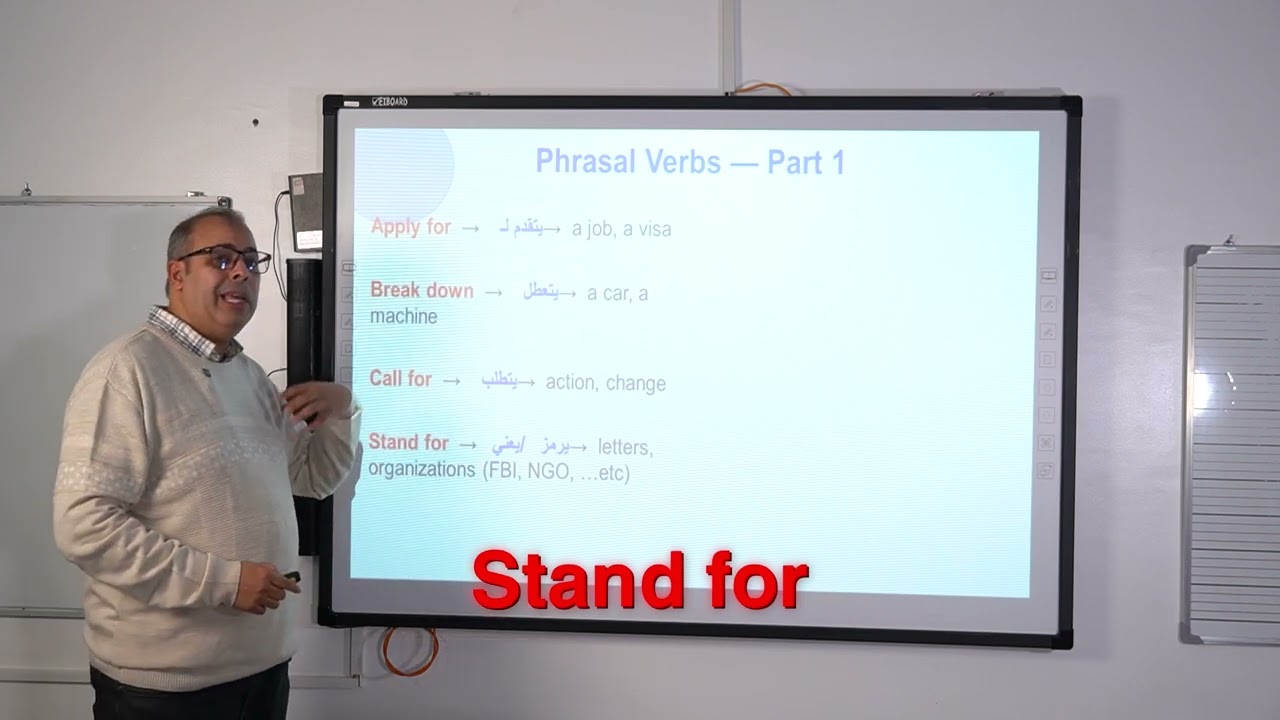
Phrasal Verbs — List A

Phrasal VerbالمعنىUsage
apply forيتقدم لـjob, visa
break downيتوقف عن العملmachine, car
call forيطالب بـaction
stand forيعني / يمثلNGO
give upيتوقف عنsmoking
keep onيستمرworking
turn downيرفضoffer
pick upيتعلمlanguage
make upيخترعstory
put outيطفئfire
take upيبدأhobby
put offيؤجلmeeting
go throughيعاني منexperience
look afterيعتني بـchild

Phrasal Verbs — List B

Phrasal VerbالمعنىUsage
look upيبحث عنdictionary
bring aboutيسببchange
look forward toينتظرevent
set upيؤسسbusiness
find outيكتشفtruth
fill inيملأform
hand outيوزعpapers
hand inيسلمhomework
pass awayيتوفىperson
set offينطلقtrip
check inيسجلhotel
take afterيشبهfather
put up withيتحملnoise
make upيصلحafter fight

Phrasal Verbs — الأفعال المركبة

What is a Phrasal Verb?
فعل + حرف جر أو ظرف يعطي معنى جديداً مختلفاً عن الفعل الأصلي
give up = يتوقف عن (not "give" + "up" separately)
pick up = يتعلم / يلتقط
look after = يعتني بـ
Group A — Common Phrasal Verbs (Part 1)
Phrasal VerbالمعنىExample
give upيتوقف عنHe gave up smoking.
take upيبدأ هوايةShe took up painting.
put offيؤجلThey put off the meeting.
look afterيعتني بـShe looks after her brother.
pick upيتعلمHe picked up French quickly.
go throughيعاني منShe went through hard times.
Group B — Common Phrasal Verbs (Part 2)
Phrasal VerbالمعنىExample
hand inيسلمHand in your homework.
set upيؤسسHe set up a new business.
find outيكتشفI found out the truth.
put up withيتحملShe can't put up with noise.
look forward toينتظر بشوقI look forward to the event.
bring aboutيسبب / يحدثEducation brings about change.

Apologising & Responding — الاعتذار والرد عليه

😔 Apologising

I'm sorry.
أنا آسف
I'm really sorry.
أنا آسف جداً
I apologise for…
أعتذر عن…
Please forgive me.
من فضلك سامحني
It was my fault.
كان هذا خطئي
I didn't mean to…
لم أقصد أن…

✅ Responding to Apologies

That's okay.
لا بأس
Don't worry.
لا تقلق
No problem.
لا مشكلة
It's alright.
الأمر على ما يرام
Never mind.
لا تهتم
It's fine.
لا بأس

📝 BAC Tip

فالباك: كتجيك situation وخاصك تعتذر أو ترد على اعتذار — استعمل هاد التعبيرات مزيان.

Writing: A Personal Email About a Cultural Event

1
Greeting: Hi / Dear [name]
2
Opening: I hope you are well / doing fine
3
Purpose: I'm writing to tell you about…
4
Details: Describe the cultural event
5
Closing: Write back soon! / Best wishes
deeply rootedcultural heritagemelting pottraditional valuescultural diversity
📝 Model Email
Subject: A Cultural Celebration

Hi Youssef,

I hope you are doing well. I'm writing to tell you about a traditional wedding I attended last weekend. It was an amazing cultural event. The celebration was deeply rooted in our traditions. The bride wore traditional clothes, and the music created a joyful atmosphere. People followed good table manners, and the event brought together people from different backgrounds, creating a real cultural melting pot.

I really enjoyed this experience because it helped me appreciate our cultural heritage and values.

Write back soon!
Best wishes,
Omar

Ready to test yourself? 🎯

Take the Unit 6 interactive quiz

Unit 6 · Cultural Issues and Values

Interactive Quiz

Exercise 1
Vocabulary — Gap Filling
10 pts
Choose from: tradition – respect – tolerance – heritage – diversity – belief – custom – identity – values – cultural exchange
Exercise 2
Phrasal Verbs — Choose the Best Answer
5 pts
Exercise 3
Phrasal Verbs — Fill in the Gaps
5 pts
Use: give up – look after – put off – pick up – set up
Exercise 4
Functions — Apologising (MCQ)
5 pts
← Home /Units/ Unit 7
Unit 07 · Citizenship

Citizenship — المواطنة

المواطنة
📹 Unit Lesson Video
🎬
Unit 7 · Citizenship · Video coming soon

Overview: Unit 7 covers citizenship, civic responsibility, and human rights. Students explore vocabulary on citizenship, reported speech, giving advice, and informal email writing.

تركز الوحدة على المواطنة والمسؤولية المدنية وحقوق الإنسان وأهمية الواجبات والتطوع والتضامن.

Key Vocabulary — المفردات الأساسية

Word / Expressionالمعنى بالعربية
citizenمواطن
citizenshipالمواطنة
responsibilityمسؤولية
dutyواجب
rightحق
obligationالتزام
democracyديمقراطية
volunteeringالتطوع
solidarityتضامن
commitmentالتزام / إخلاص
honestyصدق
respectاحترام

Collocations — التعابير المركبة

Collocationالمعنى بالعربية
active citizenshipالمواطنة الفعّالة
social justiceالعدالة الاجتماعية
voluntary workالعمل التطوعي
human rightsحقوق الإنسان
national anthemالنشيد الوطني
local communityالمجتمع المحلي
take actionيتخذ إجراء
moral obligationواجب أخلاقي
non-governmental organizationمنظمة غير حكومية

Word Formation — اشتقاق الكلمات

BaseVerbNounAdjective
respectrespectrespectrespectful
commitcommitcommitmentcommitted
volunteervolunteervolunteeringvoluntary
obeyobeyobedienceobedient
participateparticipateparticipationparticipative
helphelphelphelpful
actactactionactive
cooperatecooperatecooperationcooperative
protectprotectprotectionprotective
leadleadleadershipleading

Reported Speech — الكلام المنقول

Rule: Change tense, pronouns and time expressions
كنبدلو الزمن والضمائر والتعابير الزمنية عند نقل الكلام
She said, "I am happy." → She said she was happy.
He said, "I will help you." → He said he would help me.
They said, "We are working." → They said they were working.
Tense Changes
Direct SpeechReported Speech
Present SimplePast Simple
Present ContinuousPast Continuous
willwould
cancould
musthad to
shouldshould (no change)
Time Expression Changes
DirectReported
todaythat day
tomorrowthe next day
yesterdaythe day before
nowthen
herethere

Asking for and Giving Advice — طلب النصيحة وتقديمها

❓ Asking for Advice

What should I do if…?
ماذا يجب أن أفعل إذا…؟
Could you give me some advice about…?
هل يمكنك إعطائي نصيحة حول…؟
What do you think I should do?
ماذا تعتقد أنني يجب أن أفعل؟
If you were me, what would you do?
لو كنت مكاني، ماذا ستفعل؟

💡 Giving Advice

You should…
يجب عليك…
If I were you, I'd…
لو كنت مكانك…
Why don't you…?
لماذا لا تقوم بـ…؟
It's a good idea to…
من الجيد أن…

📝 BAC Tip

فالباك: كتجيك situation — respond by giving advice or asking for it. Use these expressions naturally.

Writing: An Informal Email About a Citizenship Activity

1
Greeting: Hi / Dear [name]
2
Opening: How are you? / Hope you are well
3
Purpose: I wanted to tell you about…
4
Details: Describe the event and activities
5
Ask a question: Have you ever…?
6
Closing: Write back soon! + Your name
active citizenshipvoluntary worklocal communitytake actionsolidarity
Subject: Citizenship Week

Hi Karim,

How are you doing? I wanted to tell you about Citizenship Week we had at school last week. We participated in cleaning the park, planting trees, and organizing a charity event. We also discussed the importance of active citizenship and how young people can take action in their communities.

It felt amazing to work together and help others. I learned that even small actions can make a big difference. This experience encouraged me to become more responsible and involved in my local community.

Have you ever taken part in any volunteering activities?

Write back soon!
Best wishes,
Omar

Ready to test yourself? 🎯

Take the Unit 7 interactive quiz

Unit 7 · Citizenship

Interactive Quiz

Exercise 1
Vocabulary — Gap Filling
10 pts
Choose from: citizen – citizenship – responsibility – democracy – solidarity – honesty – right – duty – obligation – respect
Exercise 2
Word Formation
5 pts
Exercise 3
Grammar — Reported Speech
10 pts
Exercise 4
Functions — Advice (MCQ)
5 pts
← Home /Units/ Unit 8
Unit 08 · Brain Drain

Brain Drain — هجرة الأدمغة

هجرة الأدمغة
📹 Unit Lesson Video
🎬
Unit 8 · Brain Drain · Video coming soon

Overview: Unit 8 explores Brain Drain — the emigration of skilled professionals from developing countries. Students study vocabulary, 2nd and 3rd Conditionals, purpose and reason expressions, and cause-effect article writing.

تتناول الوحدة ظاهرة هجرة الأدمغة وأسبابها وتداعياتها والحلول الممكنة، مع التدرب على الشرطية الثانية والثالثة والتعبير عن الغرض والسبب.

Key Vocabulary — المفردات الأساسية

Word / Expressionالمعنى بالعربية
brain drainهجرة الأدمغة
emigrationالهجرة إلى الخارج
skilled workersالعمال المهرة
developing countriesالدول النامية
unemploymentالبطالة
living standardsمستوى المعيشة
research opportunitiesفرص البحث العلمي
incentivesالحوافز
economic developmentالتنمية الاقتصادية
remittancesالتحويلات المالية

Collocations — المتلازمات اللفظية

Collocationالترجمة بالعربية
skilled workersعمال مهرة / كفاءات مؤهلة
job opportunitiesفرص العمل
better living conditionsظروف عيش أفضل
highly qualified graduatesخريجون ذوو كفاءة عالية
economic migrationالهجرة الاقتصادية
host countryالبلد المضيف
home countryالبلد الأم
unemployment rateمعدل البطالة
career prospectsآفاق مهنية
professional experienceخبرة مهنية
labour marketسوق الشغل
skilled workforceقوة عاملة ماهرة

Word Formation — اشتقاق الكلمات

BaseNounAdjective / Other
emigrateemigrationemigrant
developdevelopmentdeveloped / developing
employemployment / unemploymentemployed / unemployed
migratemigrationmigrant
investinvestmentinvested
educateeducationeducated

2nd and 3rd Conditionals — الشرطية الثانية والثالثة

Why do we use Conditionals?
نستعمل الجمل الشرطية للتعبير عن مواقف افتراضية. الشرطية الثانية تتعلق بالحاضر أو المستقبل، أما الثالثة فتتعلق بالماضي.
2nd: Talk about imaginary or unlikely situations in the present / future
3rd: Talk about past situations that did not happen and their imagined results
B. Forms
TypeIf-clauseMain clauseالشرح
2nd ConditionalIf + Past Simplewould + infinitiveموقف افتراضي في الحاضر أو المستقبل
3rd ConditionalIf + had + past participlewould have + past participleموقف لم يقع في الماضي
2nd: If the government paid higher salaries, more doctors would stay.
3rd: If he had found a good job at home, he would not have emigrated.
C. Examples in Context — Brain Drain
2nd Conditional (imaginary present/future):
If the government invested more in research, fewer scientists would leave.
If universities offered better facilities, graduates would stay in the country.
If there were more job opportunities, young people would not emigrate.
3rd Conditional (imaginary past):
If she had received a scholarship, she would have studied in Morocco.
If the country had built more research centres, it would not have lost its best engineers.
If they had been offered good salaries, they would have remained in their homeland.
D. Common Mistakes to Avoid
❌ If he would study harder, he would pass.
✅ If he studied harder, he would pass.
❌ If she had work abroad, she would have earned more.
✅ If she had worked abroad, she would have earned more.
❌ If they would have stayed, things would be better.
✅ If they had stayed, things would have been better.

Expressing Purpose and Reason — التعبير عن الغرض والسبب

Expressing Purpose — الغرض
StructureExampleالشرح
to + infinitiveMany graduates emigrate to find better jobs.للدلالة على الهدف
in order to + inf.She studied hard in order to get a scholarship.للغرض بشكل رسمي
so as to + inf.He left Morocco so as to improve his career.نفس معنى in order to
so that + subj + canThey emigrate so that they can enjoy better living standards.حتى يتمكن شخص من فعل شيء
⚠️ Note: so that needs subject + can + verb — NOT an infinitive.
❌ so that find better jobs  →  ✅ so that they can find better jobs
Expressing Reason — السبب
Many professionals leave because of low salaries.
Due to a lack of opportunities, graduates seek work abroad.
Since there are few research centres, scientists go elsewhere.
becausebecause ofdue tosinceasowing to

Writing: A Cause and Effect Article

1
Introduction: Introduce and define the topic briefly
2
Causes: Use firstly, secondly, because of, due to
3
Effects: Use as a result, consequently, therefore
4
Solutions: Propose solutions
5
Conclusion: Recommendation or summary
📊 Information Chart
ItemInformation
TopicBrain Drain
Cause 1Low salaries and poor working conditions
Cause 2Lack of research opportunities
Effect 1Shortage of skilled workers
Effect 2Slow economic development
SolutionBetter salaries, research funding, and incentives
firstlysecondlyas a resultconsequentlythereforedue tobecause of
📝 Model Cause and Effect Article
Brain Drain: A Challenge for Developing Nations

Brain drain is one of the most serious challenges facing developing countries today. It refers to the emigration of talented and educated professionals to wealthier nations in search of better opportunities.

There are several causes of this phenomenon. Firstly, low salaries and poor working conditions push skilled workers to look for better-paid jobs abroad. Secondly, the lack of research opportunities and modern facilities discourages scientists and engineers from staying in their home countries.

As a result, developing countries suffer from a severe shortage of qualified professionals. This leads to slower economic development and weakens the education and healthcare systems.

To solve this problem, governments must offer competitive salaries, fund research centres, and create incentives to encourage their talented citizens to stay and contribute to national development.

Ready to test yourself? 🎯

Take the Unit 8 interactive quiz

Unit 8 · Brain Drain

Interactive Quiz

Exercise 1
Vocabulary — Gap Filling
5 pts
Choose from: brain drain – emigration – incentives – unemployment – remittances
Exercise 2
Word Formation
5 pts
Exercise 3
Grammar — 2nd and 3rd Conditionals (MCQ)
5 pts
Exercise 4
Grammar — Complete the Conditionals
5 pts
Exercise 5
Functions — Purpose and Reason (MCQ)
2 pts
Exercise 6
Functions — Complete with Purpose Expression
5 pts
← Home /Units/ Unit 9
Unit 09 · Advances in Science and Technology

Advances in Science and Technology

التقدم العلمي والتكنولوجي
📹 Unit Lesson Video
🎬
Unit 9 · Science and Technology · Video coming soon

Overview: Unit 9 explores the world of science and technology and its impact on modern life. Students learn vocabulary on innovation and technology, practise Relative Pronouns, express wishes and regrets, and write a for-and-against essay.

تتناول الوحدة تأثير العلم والتكنولوجيا على الحياة المعاصرة — أسماء الموصول، الأمنيات والندم، ومقال المزايا والمساوئ.

Key Vocabulary — المفردات الأساسية

Word / Expressionالمعنى بالعربية
scientific advancesالتقدم العلمي
innovationالابتكار
artificial intelligenceالذكاء الاصطناعي
biotechnologyالتكنولوجيا الحيوية
renewable energyالطاقة المتجددة
genetic engineeringالهندسة الوراثية
space explorationاستكشاف الفضاء
roboticsعلم الروبوتات
nanotechnologyتكنولوجيا النانو
digital revolutionالثورة الرقمية

Collocations — المتلازمات اللفظية

Collocationالترجمة بالعربية
artificial intelligenceالذكاء الاصطناعي
technological progressالتقدم التكنولوجي
scientific breakthroughاختراق علمي
medical advancesتطورات طبية
digital communicationالتواصل الرقمي
cutting-edge technologyتكنولوجيا متطورة جدًا
internet accessالولوج إلى الإنترنت
technological innovationالابتكار التكنولوجي
online learningالتعلم عبر الإنترنت
social media platformsمنصات التواصل الاجتماعي
communication toolsوسائل التواصل
cyber securityالأمن السيبراني

Word Formation — اشتقاق الكلمات

BaseNounAdjective / Other
inventinvention / inventorinventive
discoverdiscoverydiscovered
developdevelopmentdeveloped
communicatecommunicationcommunicative
innovateinnovationinnovative
exploreexplorationexploratory

Relative Pronouns — أسماء الموصول

A. What are Relative Pronouns?
أسماء الموصول تُستعمل لربط جملتين معاً وإضافة معلومات حول اسم سبق ذكره، وتحل محل الاسم المكرر في الجملة الثانية.
Relative pronouns join two sentences and give more information about a noun.
They replace a repeated noun and introduce a relative clause.
B. Which Pronoun to Use?
PronounUsed forExampleيُستعمل مع
whopeopleThe scientist who discovered penicillin was Fleming.الأشخاص
whichthings / animalsThe invention which changed the world was the internet.الأشياء والحيوانات
thatpeople or thingsThe robot that was built last year won a prize.الأشخاص والأشياء
whosepossessionThe engineer whose design was chosen works in Casablanca.الملكية
whereplacesThe laboratory where they work is very modern.الأماكن
C. Examples in Context — Science and Technology
The scientist who invented the telephone was Alexander Graham Bell.
Artificial intelligence is a technology which is changing every industry.
The country whose scientists win the most Nobel Prizes leads in innovation.
NASA is an organisation where thousands of engineers work together.
The robot that was designed by students won a national competition.
D. Defining vs Non-Defining Relative Clauses
Defining — essential info, no commas:
The student who studies hard will succeed.
Non-defining — extra info, uses commas, cannot use that:
Albert Einstein, who was born in Germany, changed the world of physics.
The internet, which was invented in the 20th century, connects billions of people.
⚠️ Note: In non-defining clauses, that cannot be used — only who or which.
E. Common Mistakes to Avoid
❌ The scientist which won the prize is Moroccan.
✅ The scientist who won the prize is Moroccan.
❌ The lab who they work in is modern.
✅ The lab where they work is modern.
❌ Einstein, that was a genius, changed physics.
✅ Einstein, who was a genius, changed physics.

Expressing Wishes and Regrets — التعبير عن الأمنيات والندم

Wishes About the Present — I wish + Past Simple
نستعمل I wish + ماضٍ بسيط للتعبير عن أمنية في الحاضر — شيء لا يتحقق الآن.
⚠️ نستعمل were بدل was مع جميع الضمائر.
I wish I had a better smartphone.
I wish scientists could find a cure for cancer.
I wish technology were available to everyone.
Regrets About the Past — I wish + Past Perfect (had + PP)
نستعمل I wish + had + التصريف الثالث للتعبير عن الندم على شيء حدث أو لم يحدث في الماضي.
I wish I had studied science at university.
I wish they had invested more in research.
I wish the government had not cut the education budget.
If Only — stronger form of I wish
If only تُستعمل بنفس معنى I wish لكنها أقوى في التعبير عن الرغبة أو الندم.
If only scientists could find a cure for all diseases.
If only I had chosen a career in technology.
If only the world invested more in renewable energy.
Summary Table
MeaningStructureExample
Wish about presentI wish + Past SimpleI wish I had better equipment.
Regret about pastI wish + had + PPI wish I had studied harder.
Strong wish / regretIf only + same rulesIf only we had more funding.

Writing: A For-and-Against Essay

1
Introduction: Introduce the topic and state there are two sides
2
Arguments For: Use on the one hand, furthermore, in addition
3
Arguments Against: Use on the other hand, however, nevertheless
4
Conclusion: Balanced opinion — use in conclusion, on balance, to sum up
📊 Information Chart
ItemInformation
TopicIs technology more harmful or beneficial to society?
Argument For 1Improves communication and access to information
Argument For 2Advances in medicine save millions of lives
Argument Against 1Creates unemployment by replacing human workers
Argument Against 2Causes social isolation and addiction
ConclusionOn balance, technology is beneficial if used responsibly
on the one handfurthermoreon the other handhoweverin conclusionon balance
📝 Model For-and-Against Essay
The Impact of Technology on Society: Benefits and Drawbacks

Technology has transformed almost every aspect of modern life. While many people believe that scientific advances bring enormous benefits, others argue that they also create serious problems. This essay will examine both sides of the argument.

On the one hand, technology has greatly improved communication and access to information. Thanks to the internet, people can connect instantly across the world. Furthermore, advances in medicine and biotechnology have saved millions of lives and helped defeat diseases that were once considered incurable.

On the other hand, technology has led to the disappearance of many traditional jobs, as robots and machines replace human workers. In addition, excessive use of digital devices has caused social isolation, particularly among young people.

In conclusion, while technology does have its drawbacks, its benefits are undeniable. If used responsibly and ethically, scientific advances can greatly improve the quality of human life.

Ready to test yourself? 🎯

Take the Unit 9 interactive quiz

Unit 9 · Science and Technology

Interactive Quiz

Exercise 1
Vocabulary — Gap Filling
5 pts
Choose from: artificial intelligence – innovation – robotics – renewable energy – space exploration
Exercise 2
Word Formation
5 pts
Exercise 3
Grammar — Relative Pronouns (Choose the correct pronoun)
5 pts
Exercise 4
Grammar — Join the sentences using a relative pronoun
5 pts
Exercise 5
Functions — Wishes and Regrets (Choose the correct form)
5 pts
← Home /Units/ Unit 10
Unit 10 · International Organizations

International Organizations

المنظمات الدولية
📹 Unit Lesson Video
🎬
Unit 10 · International Organizations · Video coming soon

Overview: Unit 10 explores international organizations and their role in promoting peace, cooperation and development. Students study vocabulary, linking words, expressing certainty and probability, and advantages-disadvantages article writing.

تتناول الوحدة المنظمات الدولية ودورها في تحقيق السلام والتعاون والتنمية — أدوات الربط، اليقين والاحتمال، ومقال المزايا والمساوئ.

Key Vocabulary — المفردات الأساسية

Word / Expressionالمعنى بالعربية
international organizationمنظمة دولية
United Nations (UN)الأمم المتحدة
humanitarian aidمساعدات إنسانية
peacekeeping missionمهمة حفظ السلام
human rightsحقوق الإنسان
cooperationالتعاون
developmentالتنمية
conflict resolutionحل النزاعات
non-governmental organization (NGO)منظمة غير حكومية
global issuesقضايا عالمية

Collocations — التعابير المركبة

Collocationالترجمة
secretary generalالأمين العام
promote peaceتعزيز السلام
provide aidتقديم المساعدة
protect human rightsحماية حقوق الإنسان
solve conflictsحل النزاعات
international cooperationالتعاون الدولي
global developmentالتنمية العالمية
take actionاتخاذ إجراءات
support communitiesدعم المجتمعات
fight povertyمحاربة الفقر
raise awarenessنشر الوعي

Word Formation — اشتقاق الكلمات

BaseNounAdjective / Other
developdevelopmentdeveloped / developing
cooperatecooperationcooperative
protectprotectionprotective
governgovernmentgovernmental
assistassistanceassistant
organizeorganizationorganized

Linking Words — أدوات الربط

Part 1 — Linking Words by Function
FunctionالوظيفةLinking WordsExample
Additionالإضافةand, also, moreover, in additionOrganizations provide aid and support development.
Contrastالتناقضalthough, however, despite, in spite ofAlthough they try, conflicts still exist.
Causeالسببbecause, since, asThey cooperate because global problems affect everyone.
Effectالنتيجةso, therefore, as a resultThe UN intervenes, so peace is restored.
Sequenceالترتيبfirst, then, after that, finallyFirst, they negotiate. Then, they act.
Conclusionالخلاصةin conclusion, to sum up, overallIn conclusion, cooperation is essential.
Part 2 — Three Types of Usage
✅ Type 1: followed by Subject + Verb
because / although / since → Countries cooperate because they face global issues.
✅ Type 2: followed by Noun / Gerund / "the fact that"
because of / due to / despite / in spite ofDespite the conflict, the UN intervened.
⚠️ despite / in spite of + noun or gerund — NOT + subject + verb
✅ Type 3: Sentence Connectors (start of new sentence)
However, / Therefore, / Moreover, → used after a full stop + comma
The situation is difficult. However, solutions exist.
The country is unstable. Therefore, aid is necessary.
The UN provides food. Moreover, it supports education.

Expressing Certainty and Probability — اليقين والاحتمال

✅ Positive Certainty — اليقين الإيجابي (100% sure)
نستعمل هذه العبارات عندما نكون متأكدين 100%
ExpressionExample
mustThis must be an important organization.
I'm sureI'm sure the UN plays a key role.
certainlyThis is certainly a global issue.
there is no doubt thatThere is no doubt that cooperation is necessary.
❌ Negative Certainty — اليقين السلبي (100% sure it is NOT)
can't → This can't be an effective solution.
🔵 Expressing Probability — الاحتمال (not 100% sure)
نستعمل هذه العبارات عندما لا نكون متأكدين 100%
ExpressionExample
probablyThey will probably find a solution.
mightThe organization might help refugees.
it is likely thatIt is likely that the conflict will end soon.

Writing: An Advantages and Disadvantages Article

1
Introduction: Introduce the topic
2
Advantages: Use on the one hand, moreover, in addition
3
Disadvantages: Use on the other hand, however, in addition
4
Conclusion: Balanced opinion — use in conclusion, however
📊 Information Chart
ItemInformation
TopicAdvantages and disadvantages of social media
Advantage 1Easy communication
Advantage 2Access to information
Disadvantage 1Addiction
Disadvantage 2Cyberbullying
ConclusionUseful if used wisely
on the one handmoreoveron the other handin additionin conclusionhowever
📝 Model Article
Social Media: Advantages and Disadvantages

Social media has become an important part of modern life. While it has many advantages, it also has some disadvantages.

On the one hand, social media allows people to communicate easily with friends and family. Moreover, it gives users access to a large amount of information in a short time.

On the other hand, social media can be addictive, especially for young people. In addition, it can lead to cyberbullying and negatively affect mental health.

In conclusion, social media is very useful. However, it should be used carefully and responsibly.

Ready to test yourself? 🎯

Take the Unit 10 interactive quiz

Unit 10 · International Organizations

Interactive Quiz

Exercise 1
Vocabulary — Gap Filling
5 pts
Choose from: humanitarian aid – cooperation – NGO – human rights – development
Exercise 2
Word Formation
5 pts
Exercise 3
Grammar — Linking Words (Choose the correct answer)
4 pts
Exercise 4
Grammar — Rewrite Using the Suggested Linking Word
5 pts
Exercise 5
Functions — Certainty and Probability (MCQ)
4 pts
Unit Video
Press ESC or click outside to close
Home / Downloadable Resources
BAC English Resources

📥 Downloadable Resources

12 rich, bilingual revision resources for Moroccan 2nd Year Baccalaureate students. Click any card to open a print-ready page — your browser's Print dialog can save it as a PDF.

12
Resources
10
Units Covered
EN/AR
Bilingual
Free
For Members
💡 How to use: Tap a resource to open it in a new window with rich, formatted content. Then click the 🖨️ Print / Save as PDF button at the bottom — choose "Save as PDF" in your browser's print dialog.